Water moves fast, and so do the problems it brings to handmade rugs. In the first hour, fibers swell; within a day, odors creep in. In this guide, we’ll walk you through smart first steps, safe drying, pro-level moves, and mold control that actually works. We’ll also help you decide when oriental rug repair is a quick fix you can start now, and when it’s smarter to call us at Khazai Rug Cleaning for complete wet rug restoration and careful finishing.
What should you do first when a water-damaged Oriental rug needs repair?
Speed matters, but calm beats panic. Start by stabilizing the piece so dyes don’t wander and the foundation doesn’t warp. Think triage: stop the source, lift the rug off the floor, and keep air moving. If edges are already curling, we can secure them early, see how we get damaged edges stabilized before deeper oriental rug repair. Ready for specifics? Let’s hit the quick wins that make the most significant difference.
Immediate stabilization steps for wet rug restoration (blotting, elevation, airflow)
Work clean and gently. Blot, not rub, with white towels until you’re lifting moisture rather than spreading it. Slide small blocks or plastic lids under corners to elevate the rug; keep it flat, never folded. Start room-temperature airflow from the side, not blasting the face. That early setup keeps the pile relaxed and buys time for careful work without smears, ripples, or dye transfer.
How do experts handle Oriental rug repair after water exposure?
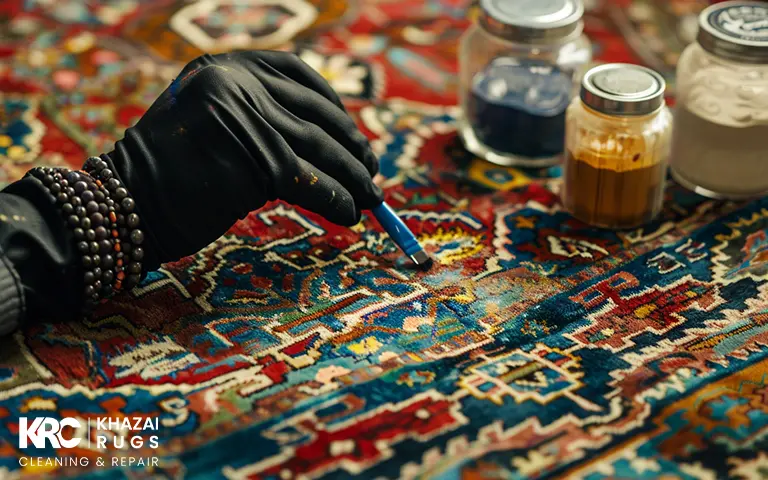
Once the rug is stable, we move in measured steps: test dyes, rinse safely, align the piece, dry evenly, and finish edges. Our crew treats each rug like a patient chart, materials, dyes, weave, and condition, so decisions aren’t guesswork. The right sequence is everything; it’s how oriental rug repair stays clean and controlled while restoration rebuilds shape and hand.
Safe drying protocols that protect dyes and wool fibers
First, a simple colorfastness test with a damp white cloth. If it lifts color, we throttle airflow and avoid heat entirely. We dry on a breathable surface, turning air across (not downward) to avoid pushing moisture deeper. Wool wants steady, moderate conditions; quick heat can lock in waves or cause dye bleed. This is the moment in oriental rug repair where patience saves beauty and money.
Professional wet rug restoration techniques (rinsing, blocking, re-fringing)
Clean, cool rinse to move out minerals and silt. Then blocking: gentle tension guides edges back to square, picture yoga for wool, slow and steady. If the fringe base is weak, we secure it; if it’s lost, we re-fringe to match the weave and tone. These wet rug restoration moves finish what stabilization started and set the stage for final oriental rug repair details like re-securing side cords.
Which risks matter most – mildew, dye bleed, or structural damage – and how fast do they develop?
Here’s the timeline we see: odors can start within 12–24 hours, surface mildew in a day or two, and deeper colonization soon after if moisture lingers. Dye bleed can appear as early as the first hours, especially with reds and blues. Foundation shifts creep in next, think ripples, buckling, or a stiff hand. The takeaway: act early, keep airflow steady, and avoid heavy handling once you see dye movement or ripples.
How can you prevent mold and odor during and after restoration?
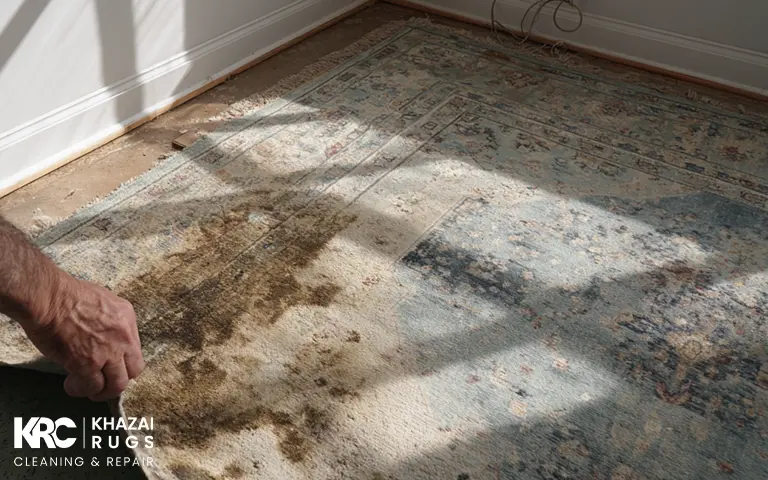
Keep your eye on moisture and air. The goal is even drying without heat, consistent ventilation, and targeted cleaning to remove any remaining water. A little planning here shields fibers and color. We fold mold prevention for rugs into every step, moisture checks, air paths, and safe treatments, so the rug doesn’t just dry; it recovers its shape and feel.
Mold prevention for rugs: target moisture levels, ventilation, antimicrobial treatments
Aim for a dry-down that reaches the core, not just the face. Keep steady cross-breeze with fans; crack a window if humidity is high indoors. We use RugSafe antimicrobial rinses where appropriate and verify with moisture readings before a rug returns to the room. Done right, mold prevention for rugs is quiet, methodical, and repeatable, even weeks later. That’s how the protection holds, not just today but after the next rainy weekend.
Deodorizing safely without harming natural fibers or colors
Skip heavy perfumes; they mask and can cling to wool. We neutralize at the source with correct pH and controlled rinses, then dry thoroughly so odors don’t rebound. A quick test: after drying, press a warm palm to the pile and smell. Still musty? Don’t gamble, let us re-treat. Thoughtful deodorizing helps prevent mold on rugs and keeps oriental rug repair results from slipping backward.
When is DIY okay, and when should you call a pro for Oriental rug repair?
Some tasks are safe at home: blotting, lifting, and setting up airflow. Beyond that, risk rises fast. Floodwater, sewer backups, heavy dye movement, silk, or antique pieces, those belong with us. Curious whether yours is a home fix or a workshop case? Ask yourself a few quick questions, then decide. If the value is unclear, you might also want to know a rug’s market value before investing in advanced work.
Decision checklist: contamination level, age/value, construction, and damage extent
Was the water clean or contaminated? How old or valuable is the rug? Wool or silk? Cotton or wool foundation? Do you see dye halos, ripples, or stiff areas? If you hit more than one “concerning” box, pause home efforts and call our team. We’ll map the safest plan and, when needed, bring the piece back without adding new problems.
Conclusion
Water happens, pipe leaks, storms, and an overflowing planter on a Sunday. The fix is calm action: stabilize, guide airflow, test dyes, re-shape, and finish edges with care. Keep mold prevention for rugs in play from minute one, and don’t push heat. If you’re unsure, lean on our hands-on crew at Khazai Rug Cleaning. With a clear process and focused oriental rug repair, your rug can return to the room it belongs in, soft underfoot, colors steady, story intact.