Meymeh Rugs
Karkass Mountain, on a valley of which Meymeh located, is a cold snowy high spot in the middle of desert between Isfahan and Kashan. The pointy hills of marble, iron and azure glow in various shades around the ski trail. A landscape with deep affinity with the unique rug design of the area, named ‘Joshaqan’ after a neighboring town.
The area gained its reputation as a rug weaving center under the Safavid Shahs. Royal rug workshops were also established there for upland pastures and excellent water, which provided the fine wool and excellent herbal and mineral dyes. Great artisan such as master weavers and dyers were attracted to the Joshaqan and villages around amongst which Meymeh is the most celebrated one. At the height of their glory these villages produced royal rugs and carpets not only for the Persian Safavids, but also for the Indian Mughal Court, in which the Persian culture was deeply praised. Thenceforth Meymeh has always been mentioned as the best of Joshaqans with upper knot count and fineness of weave, proper for a royal piece.
Technical aspects and the structure of Meymeh Rugs
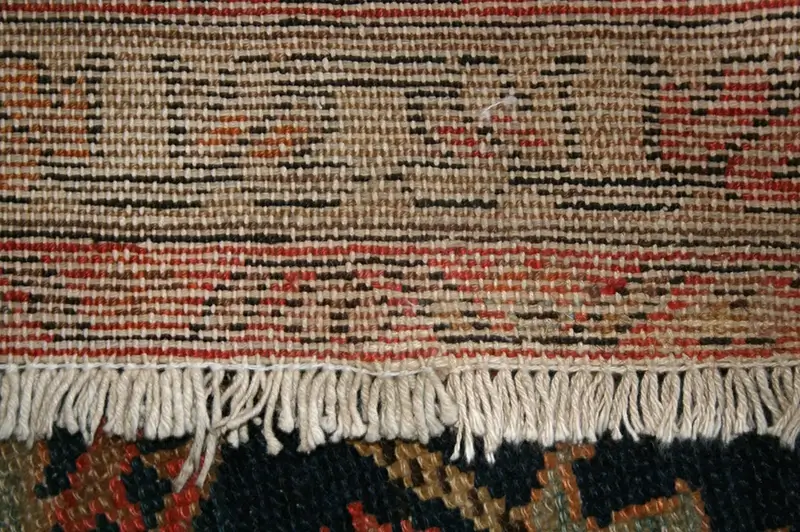
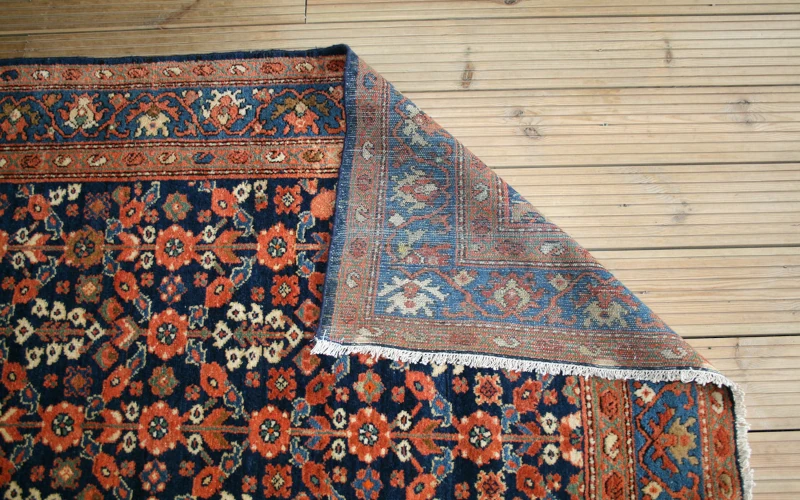
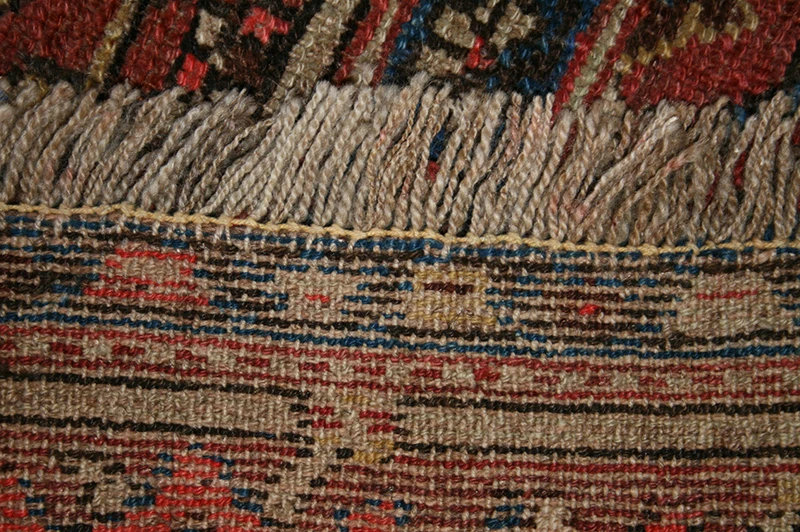
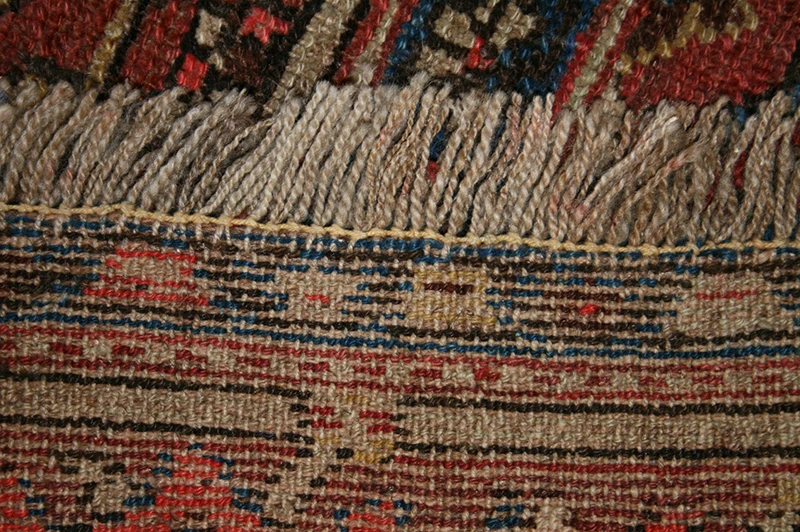
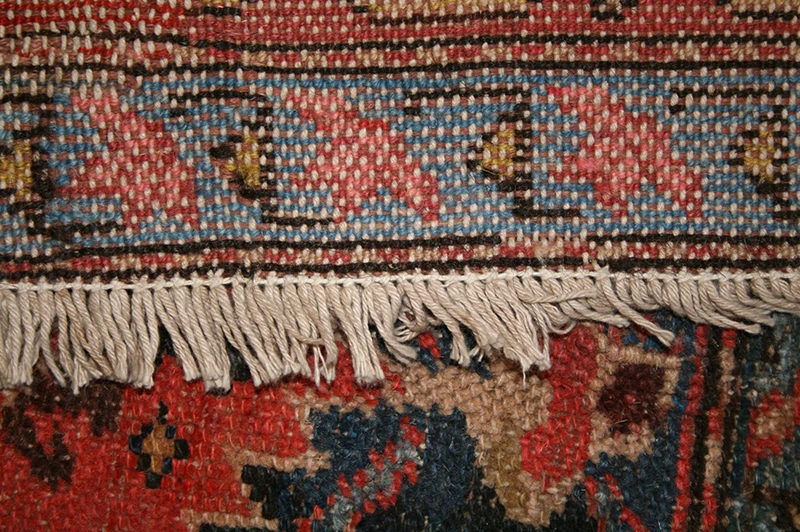
Meymeh rugs are woolen-piled on cotton foundation. Knots are asymmetric (Persian) with a density of 200 per square inch, much finer than ordinary Joshaqans.
Despite their accurate feature Meymeh rugs are usually woven without loom-dr
Dyeing and painting of Meymeh rugs
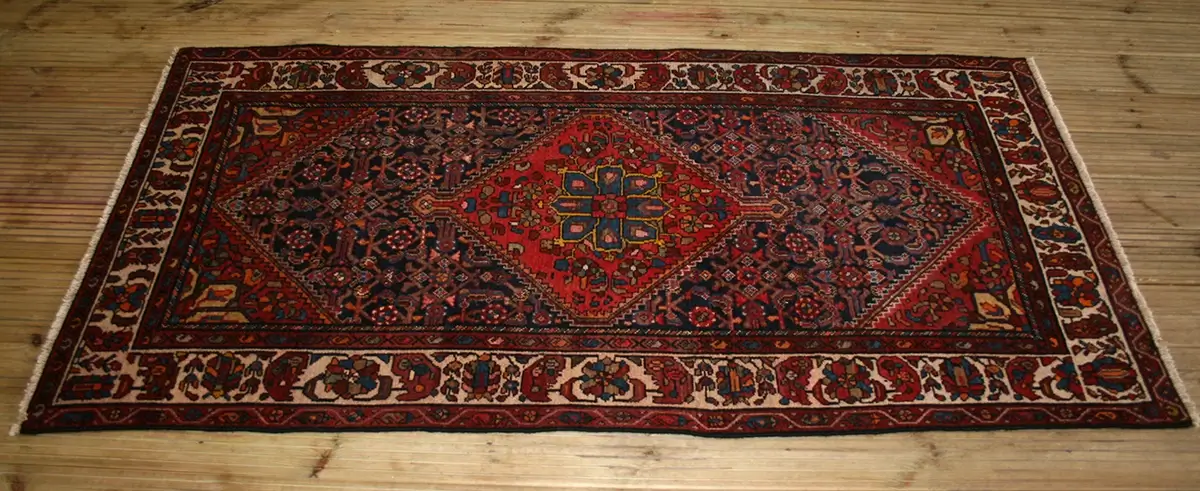
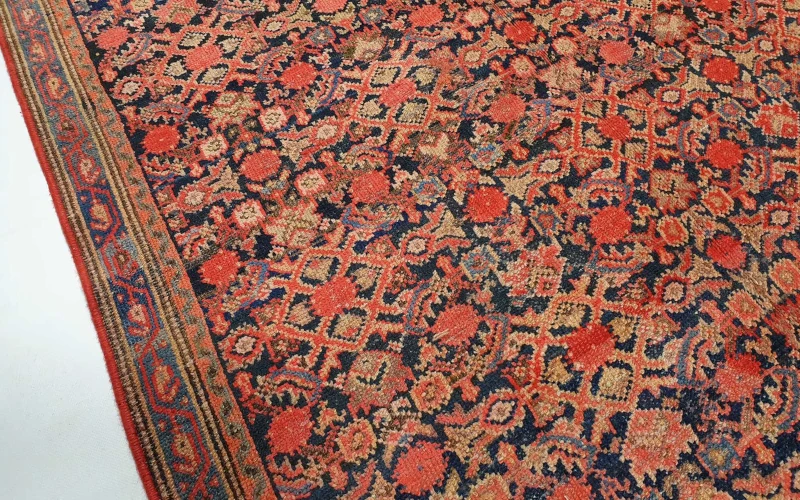
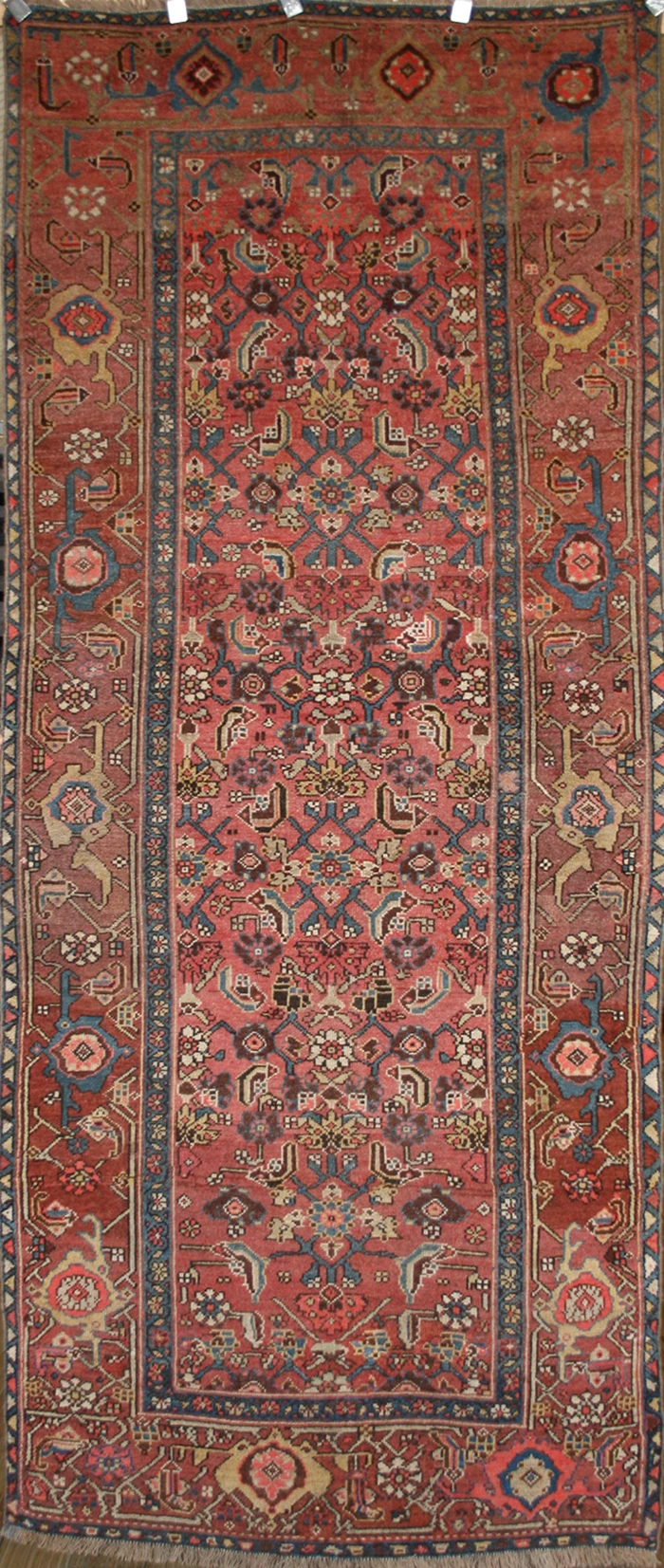
Fertile soil of the region provides herbal and mineral dyestuffs. Red and dark blue are dominant for grounds, including deep reds as well as acid-moderated pinks.
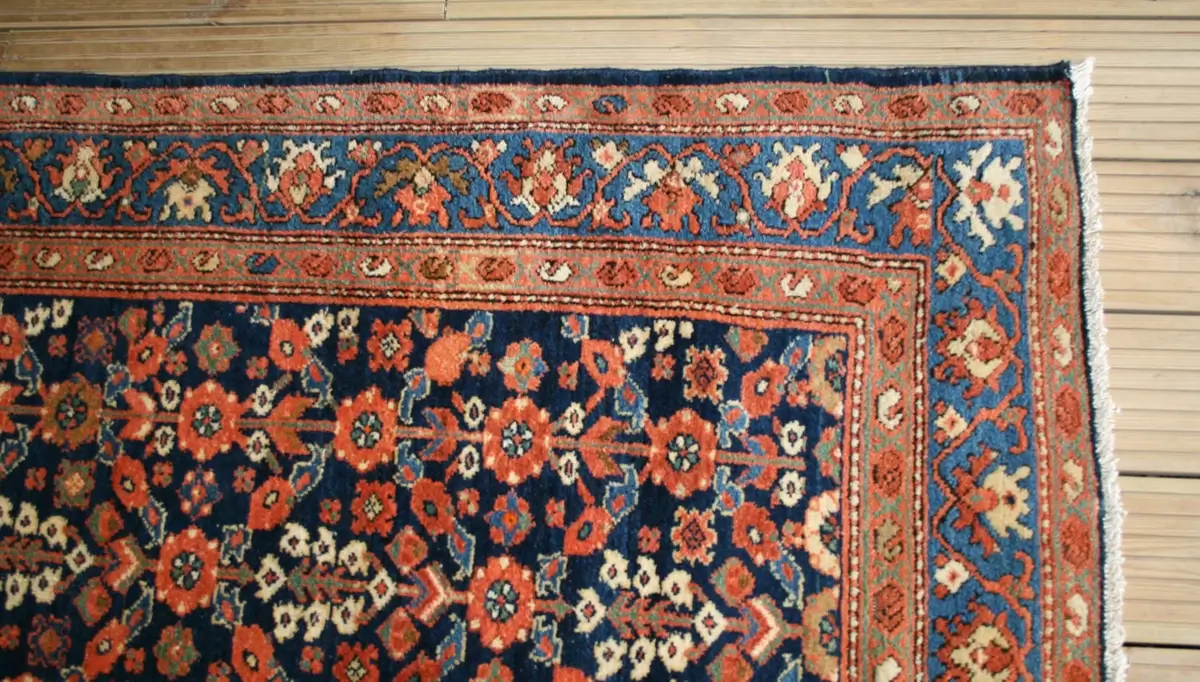
For patterns shades Meymeh’s palette is varied: azure, cobalt and midnight blues, pistachio, light and dark greens, yellows and oranges as well as white and ivory, to be mentioned.
Designs and patterns of the Meymeh rugs
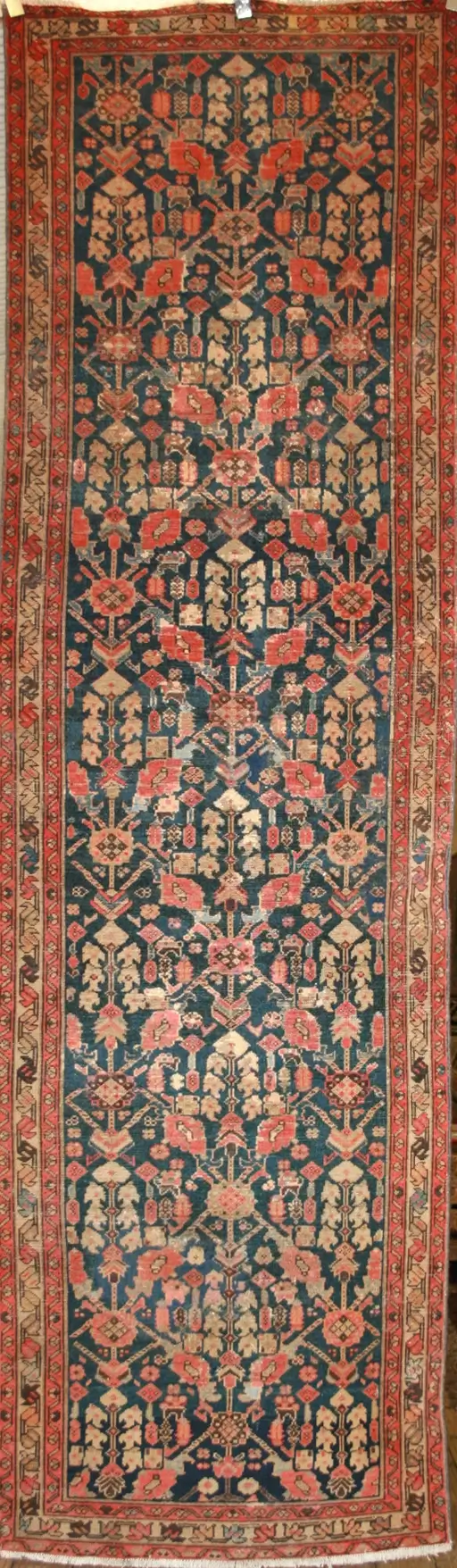
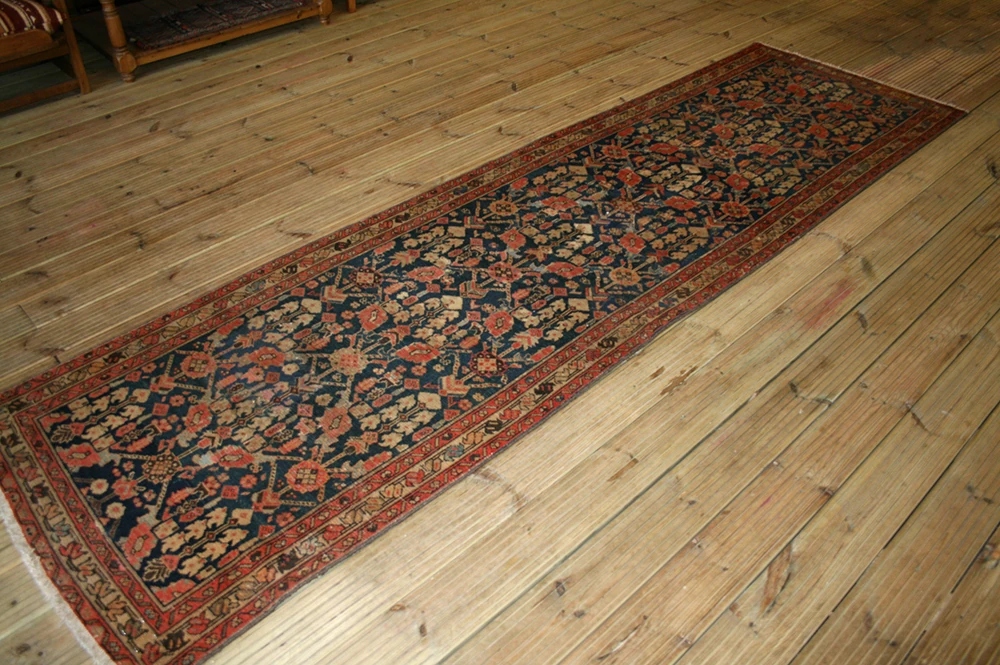
Called Joshaqan, the design of the area has world reputation, imitated from India to Romania. Rectilinear floral motifs, framed with invisible vertical lozenges, fill the ground to make a lattice of neat geometric sprays, leaves and flowers. Such neatly rendered patterns may appear curvilinear in the first glance.
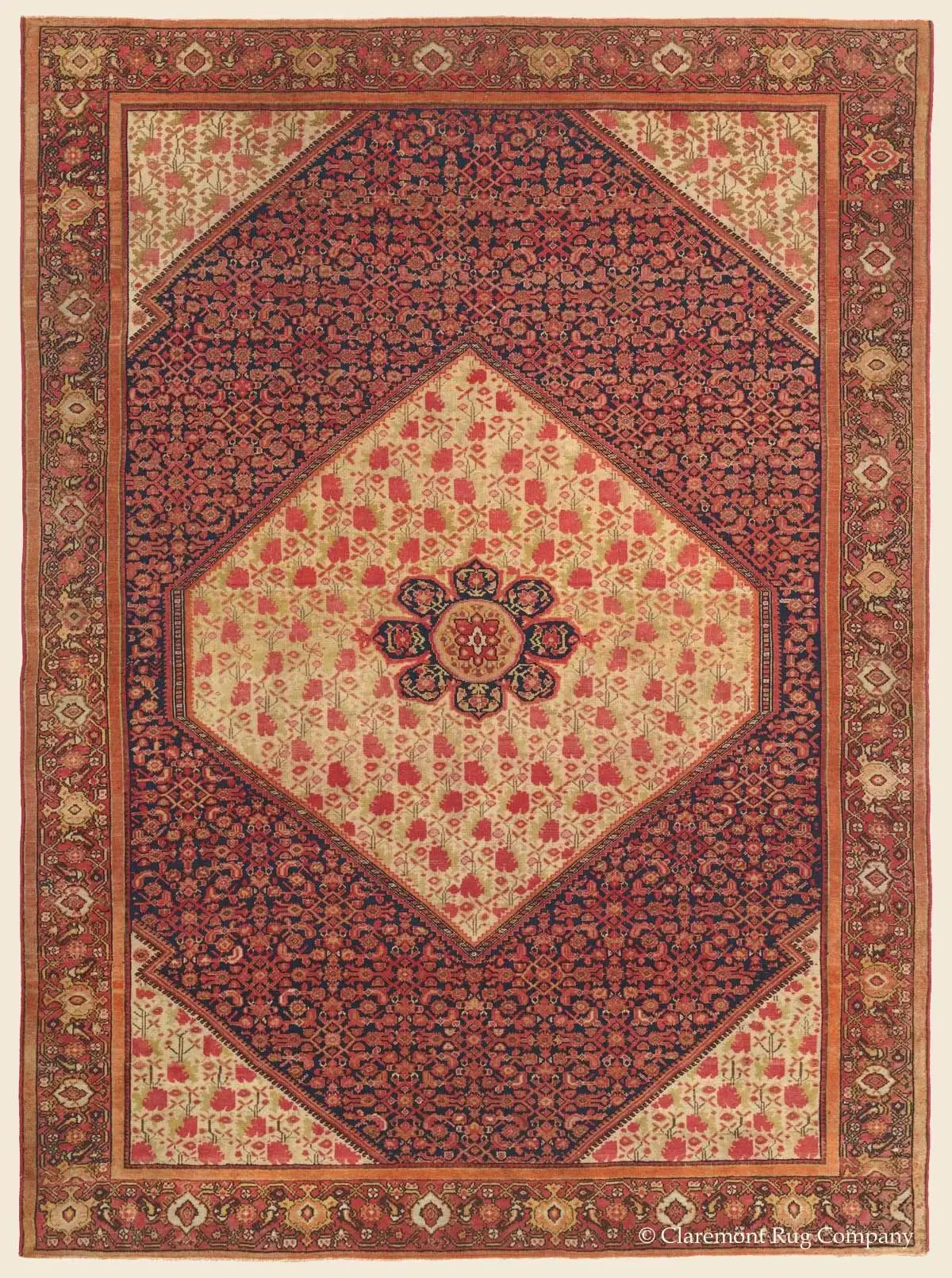
In antique Meymeh sometimes the lozenges surround a bigger lozenge that serves as a central medallion. In some cases such a central medallion could be deemed just by the difference of colors or type of floral motifs while examples with certain central medallion and corners are also numerable, some with large corners and tiny stellar medallions, others with medium corners and medium round medallion.