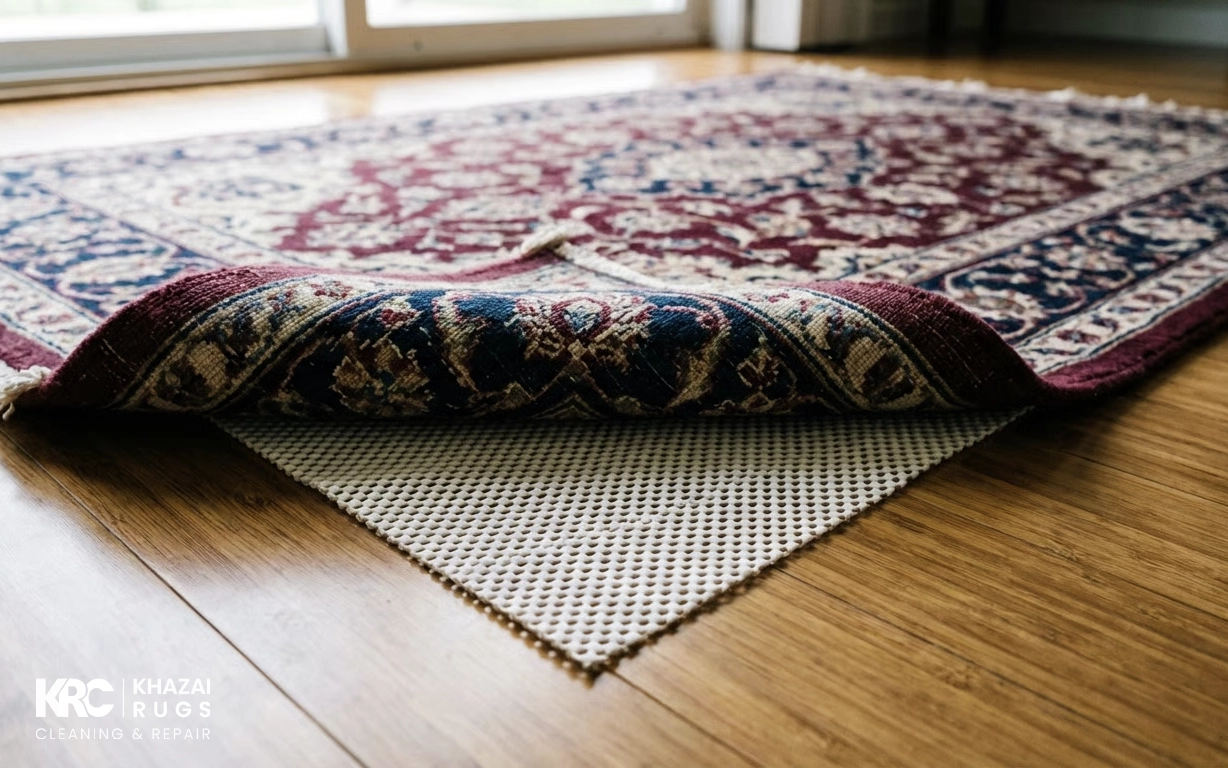
A rug pad on hardwood floors is often misunderstood as optional, when in reality it plays a critical protective role. They last a long time, but they can still be broken. Putting an area rug straight on hardwood floors without a rug pad underneath is one of the most common mistakes people make. At first, everything may look fine, but over time, the damage quietly adds up.
Rug pads are often seen as optional accessories, but when it comes to hardwood floors, they serve a much more important purpose. They keep your floors safe, make your rug last longer, and make the whole room more comfortable and safe.
Let’s take a closer look at whether rug pads are truly necessary, and what happens when you skip them.
Do You Really Need a Rug Pad on Hardwood Floors, or Is It Optional?
The short answer is: yes, you do need one. On hardwood floors, a rug pad on hardwood floors is not a luxury, it’s a necessary layer of protection for both the rug and the wood surface.
Since hardwood floors are smooth, rugs that are put right on them tend to move around or trap grit underneath. Even if a rug looks stable, the constant walking on it causes small movements that wear away at the floor’s finish over time. Neither the rug nor the wooden floor will be safe from long-term damage without a rug pad.
What Happens When You Skip a Rug Pad
When a rug sits directly on hardwood flooring, several problems can develop over time:
- When dirt gets stuck, it can scratch and dull things like sandpaper.
- Finish the wear in places where rugs will stay for years.
- It is dangerous because it slips and bunches.
- Faster rug deterioration from constant friction against a hard surface
These issues often go unnoticed until the rug is moved, and by then, the damage is already done. A rug pad prevents these problems before they start.
What Are the Key Benefits of Using Rug Pads on Hardwood Floors?
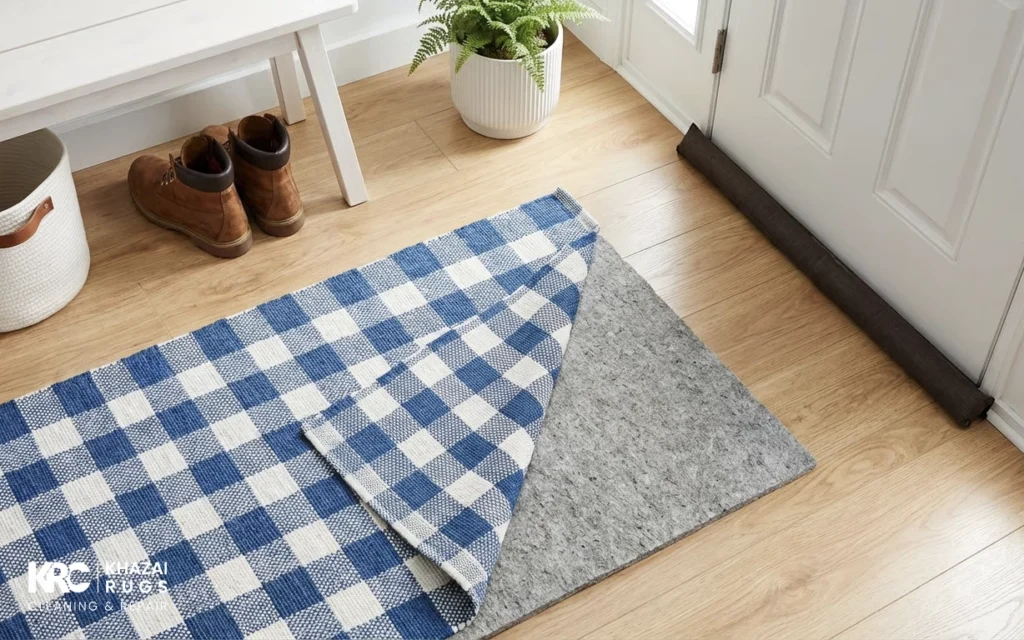
Rug pads do much more than hold a rug in place. They protect your investment from both sides—the rug above and the hardwood floor below.
Protecting Floors from Scratches and Slips
Hardwood floors are particularly sensitive to abrasion. Minuscule particles of dust and grit become ensnared beneath rugs, gradually grinding into the wood with each step taken. A rug pad serves as a protective layer that absorbs movement and helps prevent friction from harming the floor’s surface.
Rug pads also significantly reduce slipping. Rugs without a rug pad on hardwood floors can slide unexpectedly, especially in busy areas like hallways, living rooms, and entryways. This not only puts your flooring at risk but also increases the chance of trips and falls.
Adding Comfort and Extending Rug Life
An on-floor rug can feel flat and harsh. A rug pad makes walking on the rug more comfortable. The pad additionally warms and beautifies the room.
Rug pads distribute weight evenly, preventing fiber crushing, stretching, and uneven wear. This support helps rugs retain their shape, texture, and beauty, especially in high-traffic areas.
How Do You Choose the Right Rug Pad for Your Type of Floor?
There are different kinds of rug pads, and picking the wrong one can hurt your floors more than help them.
When selecting a rug pad, consider the following:
- Materials that won’t damage hardwood: Look for pads made of natural rubber, felt, or a mix of the two. These materials give you grip without hurting wood finishes.
- Breathability: Pads should let air flow through them so that water doesn’t get stuck between the rug and the floor.
- The right thickness: Sometimes thicker isn’t better. The pad should hold the rug in place without making it feel unsteady or getting in the way of doors.
- Right size: A rug pad should be just a bit smaller than the rug so that it doesn’t show and the ends don’t curl.
Latex, PVC, and adhesive-backed pads should not be used on wooden floors because they can change color or react chemically over time.
How Can You Keep Your Rug Pad Clean and Working Effectively?
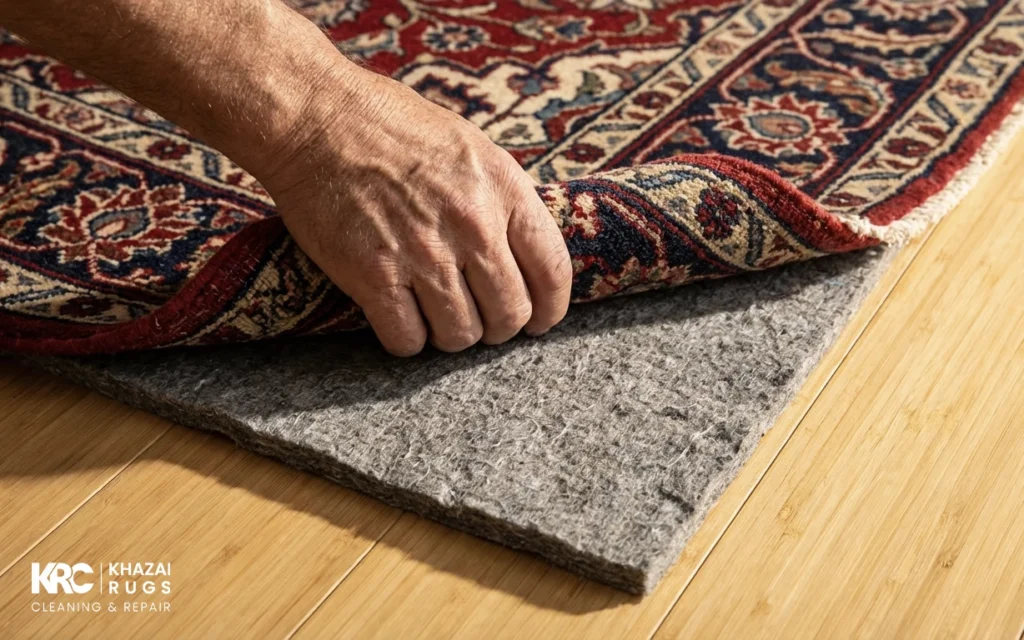
Rug pads don’t need to be fixed all the time, but a little care goes a long way toward keeping them working well.
Grit doesn’t build up when you lift the rug every so often to look for stuck-on dirt or trash. During regular cleaning, vacuuming the floor under the rug also keeps both surfaces in better shape.
If a spill occurs, it’s important to dry both the rug and the pad thoroughly. Moisture left untreated can lead to odors, floor staining, or mold growth.
When to Replace or Refresh Your Rug Pad
Even high-quality rug pads don’t last forever. Signs it may be time to replace your rug pad include:
- Loss of grip or slipping
- Crumbling, brittleness, or uneven texture
- Persistent odors that don’t dissipate
- Visible wear or compression
It doesn’t cost much to get a new rug pad when you think about how much it costs to fix broken hardwood floors or buy a new rug because the old one wears out too fast.
Conclusion
Is a rug pad truly necessary for hardwood floors? The reality is clear: indeed, without a doubt. A quality rug pad safeguards your flooring from scratches, reduces slipping, increases comfort, and extends the lifespan of your rug considerably.
Choosing and maintaining the right rug pad is crucial to protecting hardwood floors and getting the most out of your carpets. A professional evaluation can help you choose a pad that fits your rug, floor, and lifestyle.
Check out our Rug Padding Services to get professional help and keep your hardwood floors and rugs in great shape for years to come.